

Chief Wilson gains protection from a stoutly timbered balance sheet, aided by its investment unit
Can Citi Private Bank monetise cross-border complexity as Asian wealth changes hands
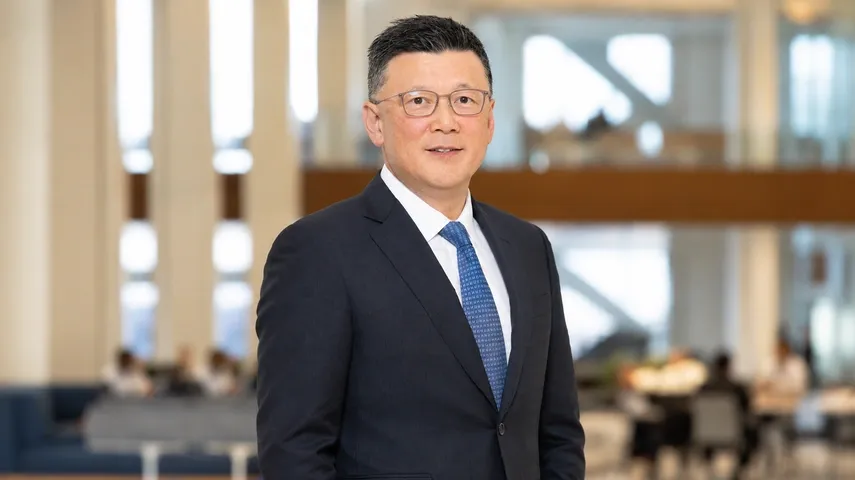
Citi Private Bank is focusing its regional strategy around multi-jurisdictional family office advisory and institutional balance-sheet integration, testing whether cross-border operational complexity can insulate high-end advisory margins from commoditisation.
International private banks competing across Asia Pacific confront a fundamental structural transformation in client behaviour and operating economics. The traditional business model of distributing standardised investment products to domestic business owners is facing severe margin compression as wealth decentralises geographically and transfers to a more sophisticated, globally mobile generation. Asian wealth creators no longer operate within single regulatory boundaries; their commercial enterprises, holding entities and family members are dispersed across multiple legal and tax regimes.
This dispersion creates severe friction for private banks built primarily around domestic booking centres or commission-driven transaction desks. When entrepreneurial families require multi-currency liquidity, cross-border holding structures or international commercial financing, product-centric wealth managers are routinely bypassed in favour of specialised boutique advisers and corporate investment banks. Global institutions therefore face the challenge of integrating cross-border corporate banking, capital markets capabilities and multi-generational family office advisory without sacrificing the high-touch engagement that defines private wealth management.
Addressing this structural shift requires wealth managers to look beyond conventional asset-tier customer categorisation and segment clients by the operational complexity of their needs, according to Steven Lo, Head of Japan, Asia North & Australia and Asia South at Citi Private Bank. Lo outlined three pillars of the bank’s approach to serving Asia's ultra-high-net-worth (UHNW) segment: leveraging an integrated corporate and investment banking model across jurisdictions, embedding family office governance and philanthropy into succession mandates and deploying artificial intelligence (AI) as an adviser-enablement engine rather than a digital replacement.
Complexity over asset size: leveraging “One Citi”
Private wealth institutions historically categorise relationships using rigid liquid balance tiers, deploying uniform investment menus to accounts meeting pre-defined wealth thresholds. Lo argued that this framework is inadequate for Asian wealth creators, whose personal liquidity remains inextricably linked to operating businesses. Citi Private Bank screens clients for structural complexity alongside investable balances, focusing on cross-border investment exposure, business ownership, succession requirements and intergenerational wealth transfer.
The operational vehicle designed to monetise this complexity is the "One Citi" model, which brings together capabilities across the Private Bank, Wealth, Markets and Banking divisions. In Asia, entrepreneurial wealth creators rarely separate their corporate capital-raising needs from their personal balance sheets. By connecting enterprise and personal wealth, the bank positions itself to deliver corporate debt financing, structured liquidity, and institutional capital markets execution alongside core portfolio construction. This institutional connectivity shifts the private banking relationship from a transactional distribution pipe into an enterprise advisory partnership. Citi’s 2026 Global Family Office Report supports this approach, finding that 74% of surveyed Asia Pacific family offices hold controlling stakes in operating businesses.
Succession advisory as an institutional retention tool
The most vulnerable point for wealth management franchises across Asia Pacific is generational succession. As the next generation of family principals reshapes portfolio allocations, private banks face potential client attrition when inheritors dissolve legacy relationships in favour of contemporary multi-family offices and digital platforms. Lo identified family office advisory as a core capability to support clients with wealth structuring and governance, succession and intergenerational planning, and next-generation engagement.
Lo observed a pronounced structural shift in the preferences of second-and third generation family principals, who systematically place greater emphasis on global asset diversification, technological innovation, and purpose-driven legacy planning than their predecessors. To engage rising family leaders early, the bank has institutionalised its client contact through dedicated Family Office Forums and thought leadership programmes, convening principals and external specialists to address intergenerational governance, direct private investing, technology adoption and succession mechanics.
A critical operational element of this transition is the integration of structured philanthropy into wealth planning. Rather than treating charitable donations as discretionary giving, next-generation family principals increasingly demand formal philanthropic vehicles and strategic giving advisory aligned with family values and impact investments. By establishing philanthropic structures and formal family governance frameworks, the bank embeds itself directly into the architecture of the family office, ensuring that custodial accounts and advisory mandates endure beyond the founder's tenure.
Multi-jurisdictional reach and the limits of automation
The commercial imperative of capturing cross-border wealth flows is evident in the financial profile of Citi’s global wealth division. Lo shared that Asia contributes approximately one-third of Citi Wealth’s global revenues and remains the fastest growing and most productive region within the Private Bank. While Hong Kong and Singapore continue to serve as the region's primary international booking and advisory centres, the underlying entrepreneurial capital originates increasingly from commercial corridors across Greater China and Southeast Asia.
Capturing these multi-currency, multi-jurisdictional flows requires an operational footprint that matches the international mobility of wealth creators. Clients routinely operate commercial businesses in Asia, secure debt or equity financing internationally, deploy investment capital across global markets and maintain family residences on different continents. Lo highlighted the bank’s international network, spanning more than 180 countries and jurisdictions, as a core operational differentiator that enables advisers to coordinate asset structuring, foreign exchange management and execution across booking centres.
However, administering multi-jurisdictional wealth structures imposes heavy compliance and operational costs that threaten adviser productivity. To manage this friction, the bank is embedding AI into its advisory infrastructure. Lo framed the future of UHNW management as "human-led and AI-enabled," deploying AI to provide more timely insights, greater personalisation and stronger decision support. Crucially, Lo drew a firm boundary around automation: because UHNW wealth management remains fundamentally relationship-driven, technology complements rather than replaces the trusted adviser, helping them to spend more time on meaningful client conversations and strategic advice.
The operational challenge ahead
By connecting private client portfolios directly to its institutional corporate banking and markets balance sheet, Citi Private Bank has constructed an operating framework tailored to the borderless commercial realities of Asian family offices. Looking forward, Lo expects regional growth to be propelled by four structural trends: continued wealth creation across Asia, the rapid internationalisation of private capital, the institutional expansion of family offices, and accelerating demand for coordinated cross-border structuring.
The forward-looking operational test for the bank lies in executing this integrated institutional model across an increasingly complex regulatory landscape. As family offices scale in financial sophistication and demand direct institutional-level access to global capital markets, maintaining seamless collaboration between private banking coverage, investment banking desks and risk management will determine whether Citi can sustain its regional revenue productivity while defending the personal, relationship-driven core of private wealth management.
Keywords: Private Markets, Wealth Planning, Relationship Managers, Affluent Investors, Family Office, Intergenerational Wealth Planning, Ultra-high-net-worth Wealth Management, Cross-border Wealth Management, Family Office Advisory, Intergenerational Wealth Transfer, Integrated Banking, Artificial Intelligence In Wealth Management
Institution: Citi, Citi Private Bank
Country: Japan, Australia, Singapore, Hong Kong, China
Region: Asia Pacific, Southeast Asia, North Asia
People: Steven Lo




Leave your Comments