

A lot of recent issues are faring badly but investors queue up for the next one
Can HDFC Bank turn its retail banking scale into a wealth management advantage?
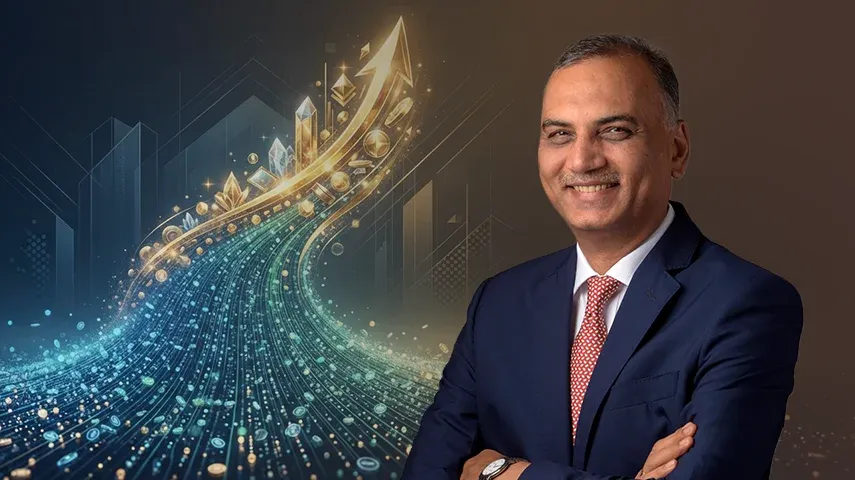
HDFC Bank aims to grow its wealth management business by combining relationship-led services with its SmartWealth digital platform, drawing on the scale of its retail banking franchise.
HDFC Bank reported INR 6.2 trillion ($65.2 billion) in wealth assets under management (AUM) as of 31 March 2026. Its wealth management business serves approximately 93,000 families and nearly 200,000 individual clients.
Since its launch in January 2024, SmartWealth has recorded 1.2 million downloads and attracted approximately INR 40 billion ($420 million) in AUM.
Rakesh K. Singh, Group Head of Private Banking, International Banking, Financial Institutions and Banking-as-a-Service (BaaS) at HDFC Bank, explained how the bank is balancing scale with personalised service, disciplined investment selection and investment in people.
Investment size divides clients between two models
HDFC Bank is a full-service bank with over 100 million customers and a wide distribution network of over 9,700 branches. Its dedicated wealth management operation serves clients through a hub-and-spoke model with relationship managers (RMs) supported by service RMs, investment analysts and team leaders. The most senior RMs generally serve ultra-high-net-worth clients.
Serving such a large customer base entirely through physical relationships would be impractical. That gap led the bank to launch SmartWealth, a do-it-yourself (DIY) investment platform in 2024. Investment size broadly determines which service model a customer uses.
“SmartWealth caters to the DIY population across geographies, and it helps us manage the wealth of customers where physical access isn’t financially viable. SmartWealth has no minimum investment threshold. Broadly, customers investing up to about INR 10 million ($105,000) use SmartWealth, while those above this level are served through the relationship-led wealth management model,” Singh said.
Service, alpha and retention underpin the model
Singh points to three measures of success: client service, investment alpha and retention of experienced bankers.
“Our Net Promoter Score (NPS) is 92, possibly one of the highest across service firms and competing banks. That is a source of great pride for us,” he said, crediting the relationship managers, wealth bankers and service teams.
To protect service standards, the bank generally assigns around 100 clients to each wealth RM, with the ratio ranging from 90 to 110. “Human bandwidth is always a constraint. The moment you add more clients, there is a challenge of a dip in service levels,” he said.
On investment performance, Singh said: “Over the last year to year-and-a-half, when markets have been moving sideways, we have managed to deliver between 100 and 150 basis points of alpha over the respective benchmarks.” He said this has helped the bank retain and grow AUM. The reported alpha is net of fees but excludes taxes, which vary by customer.
Despite strong competition for wealth management talent, the bank has managed to retain its senior leaders and bankers in the wealth team. Singh attributes this to a balanced, institutionalised model that gives bankers opportunities to develop client relationships. “Our focus continues to be very clear: service, alpha and team retention. The first two are client-focused, and the third is team-focused.”
New client relationships drive wealth growth
Singh cited approximately INR 1.2 trillion in liability AUM.
According to Singh, new relationships contribute roughly 70%–75% of annual growth, with existing clients accounting for 25%–30%. The latter share is higher when markets perform well. In peak markets, clients may withdraw funds to purchase property, including distressed real estate, or to invest overseas.
He added that the business operates at a cost-to-income ratio of about 42%. The bank continues to work on costs and revenues but does not view profitability as the sole measure of a client relationship. For Singh, the competitive distinction is consistency rather than product novelty.
“We need to offer what others are offering. But we believe that our care for the customer, through alpha and service levels, will continue to build our moat as we go along.”
Fund selection drives alpha within a beta of 0.9 to 1
The bank aims to generate higher alpha than the 100–150 basis points it has recently delivered. He attributes this performance to fund selection across mutual funds, alternative investment funds (AIFs) and portfolio management services (PMS).
“If you look at a spectrum of funds, about 30%–40% beat the benchmark; the rest don’t,” he said. This makes disciplined manager and fund selection important, particularly for well-informed clients who can access investment products through multiple channels.
The bank also moved relatively early into flexi-cap funds, multi-asset funds, real estate investment trusts (REITs) and infrastructure investment trusts (InvITs). “We ensured that some allocations gradually moved towards more balanced portfolios rather than being skewed towards large caps,” Singh said. He acknowledged that greater small-cap exposure might have produced higher alpha, but at the cost of more risk. “Our approach is generally to keep beta close to 0.9 to 1.”
SmartWealth extends reach without a dedicated salesforce
The bank’s approximately 70,000–75,000 branch-based RMs recommend SmartWealth by default to customers looking to build wealth.
“Within two-and-a-half years, we have 1.2 million downloads of SmartWealth, and it manages around INR 40 billion ($420 million) in wealth assets. Its salesforce is zero; it is completely DIY. It is an investment engine introduced by bank RMs in their client interactions.”
As of 30 September 2026, SmartWealth had approximately 600,000 customers and a reported activation rate of 54%. The bank defines activation as a customer completing at least one transaction since registration, involving a mutual fund lump-sum investment, systematic investment plan (SIP), fixed deposit or recurring deposit. This measures cumulative activation rather than ongoing activity. Around 60,000 bank employees also use SmartWealth.
The platform enables customers, including those with a dedicated wealth manager, to consolidate external holdings, review daily reports and execute transactions. It is available through net banking and as a standalone app. Usage is particularly strong among customers aged 35–50.
Singh expects SmartWealth to break even by March 2028, roughly four years after launch, on a standalone basis.
The bank deliberately avoids intrusive follow-ups. “If you are on the app and stop a transaction midway, you won't get any calls or WhatsApp texts. All nudges come through the app only.”
Digitalisation also extends to the relationship-led business. “All our interactions, including investments and redemptions, are already digital.”
The bank has conducted around 100 investor education initiatives. Singh regards them as a way to deepen engagement, listen to customers and refine the proposition rather than necessarily generate an immediate sale. “More than what we do, we also learn,” he said.
Serving clients' wider financial needs
RMs also help clients access other bank services, including home loans, loans against securities, corporate term loans and working capital. For trusts and succession-related requirements, the bank offers a free referral service rather than direct trust administration. Offshore investing is facilitated through an offering associated with HDFC Securities.
The domestic offering spans private equity, private credit, listed securities, AIFs and PMS. High-yield bonds, structured products and certain unlisted securities are generally excluded if they do not meet the bank’s approval standards.
“First, AMCs have to pass muster, then funds have to pass muster based on performance, consistency, the fund management team and other criteria. Only then do recommendations flow to our customers.”
Expanding the wealth franchise
The strategy has three pillars: reaching more families, developing RM capabilities and building a more seamless digital interface. The wider banking franchise provides a base for that expansion. Technology is intended to make the customer experience more frictionless.
Singh said recurring trail income provides some stability. Depending on the year, trail commissions account for approximately 55%–60% of the wealth business’s income, reducing reliance on one-off product sales.
Training is another priority. The bank has dedicated core and advanced wealth management courses. “We make substantial investments in training our relationship managers,” Singh said, emphasising that developing capability also helps retain experienced staff.
Ultimately, expansion is not intended to displace the measures on which the business is judged. “Our North Star continues to be our NPS, our client portfolio alpha and whether we are able to retain our large workforce by investing in their growth and skill building.”
HDFC Bank’s extensive retail banking network provides a base for expanding its wealth management franchise, while SmartWealth extends access beyond relationship-led services. With each wealth RM serving around 100 clients, the bank must balance expansion with maintaining personalised service and investment performance.
Keywords: Wealthy Families, High Net Worth Individuals, Affluent Banking, Digital Wealth Platform, Succession Planning, Wealth Advisory, Digital Wealth Management, Investment Advisory, Wealth Management Expansion
Institution: HDFC Bank
Country: India
Region: Asia Pacific, South Asia
People: Rakesh K. Singh




Leave your Comments